
close
Choose Your Site
Global
Social Media
Views: 0 Author: Site Editor Publish Time: 2025-10-21 Origin: Site
Have you ever wondered how fiber networks stay lightning fast? Fusion splicing holds the secret — it’s the key to strong, seamless fiber links.In this guide, you’ll learn how to fusion splice fiber with a Fusion Splicer, step by step, to achieve low-loss, reliable connections.
Fusion splicing joins two optical fibers by melting their ends together using an electric arc. This process forms a continuous glass pathway that minimizes reflection and insertion loss. Unlike mechanical splicing, which uses alignment clips or connectors, fusion splicing produces a more durable joint capable of withstanding environmental stress.
The resulting splice typically shows a signal loss as low as 0.02 dB—almost imperceptible in real-world applications. This low-loss result makes fusion splicing the preferred method for telecommunication networks, FTTH systems, and industrial automation lines.
Mechanical splicing is faster but less reliable. It relies on physical contact between fibers, which can loosen over time. Fusion splicing, on the other hand, creates a permanent weld that remains stable for decades. In high-density data transmission networks, that reliability translates into reduced downtime and maintenance costs.
A Fusion Splicer automates the alignment, heating, and welding of fiber ends. Modern splicers use dual cameras and precision motors to align cores within microns. Once aligned, an electric arc melts and fuses the fibers seamlessly. The result is a strong, low-loss joint suitable for long-distance and high-bandwidth connections.
Fusion splicing is used in telecommunication backbone links, submarine cable systems, fiber-to-the-home installations, and data center interconnects. It’s also applied in military, aerospace, and energy sectors where signal reliability is critical.
A Fusion Splicer consists of electrodes, alignment cameras, a control interface, and a heat oven for sleeve protection. Most units also include an estimated loss calculator and tension tester. Regular cleaning of electrodes and alignment grooves prevents errors and ensures accuracy.
Technicians require additional tools, such as:
● Fiber strippers for removing coatings
● Precision cleavers for smooth fiber ends
● Alcohol wipes for cleaning
● Heat-shrink sleeves for protection
● Fiber holders and clamps for positioning
Cleanliness determines splice success. Optical-grade alcohol, lint-free wipes, and fiber cleaning fluid eliminate residues that can cause reflection or burn marks during fusion.
After splicing, use an Optical Time-Domain Reflectometer (OTDR) and power meter to confirm splice quality. OTDR traces help locate splice points and verify signal continuity.
Tool Type | Function | Recommended Use |
Fusion Splicer | Melts and aligns fibers | Primary splicing operation |
Fiber Cleaver | Creates precise end-face | Essential before fusion |
OTDR | Tests signal reflection | Post-splicing validation |
Heat Oven | Seals protection sleeves | Ensures durability |
A clean, stable workspace ensures optimal splicing quality and prevents contamination. Avoid direct sunlight, strong wind, and dust, which can cause misalignment or arc instability. In outdoor or field environments, use weather-protected enclosures, fiber tents, or service vans to create a stable, temperature-controlled area for precision work and equipment safety.
Use a high-quality fiber stripper designed for optical fibers to remove the coating evenly without damaging the cladding. Uneven stripping can introduce microcracks or scratches that lead to signal loss. Always inspect the stripped section with a magnifier to ensure a smooth, consistent surface before cleaning and cleaving.
After stripping, thoroughly clean the bare glass using lint-free wipes and 99% isopropyl alcohol. Gently wipe from the buffer toward the fiber tip in one continuous motion to prevent contamination. Proper cleaning ensures the fusion arc melts only pure glass, reducing insertion loss and preventing air bubbles or burnt residue.
A perfect 90° cleave is essential for precise core alignment and low-loss fusion. Even slight angular errors or chips on the fiber end can cause reflection and higher attenuation. Use a precision cleaver with sharp blades and regularly calibrate it to maintain consistent performance and professional-grade splice quality.
Always wear protective eyewear and handle glass fibers carefully to prevent injury. Dispose of fiber shards in a sealed container to avoid contamination or accidents. Keep your workspace tidy, ensure proper ventilation, and never touch bare fiber ends with your hands, as oils and dust can interfere with the fusion process.
Insert both prepared fibers into the Fusion Splicer’s clamps with care, ensuring proper alignment along the optical axis. Secure them firmly but without tension to prevent slippage. Correct loading ensures accurate positioning, stable fusion arcs, and consistent splice results in all environmental conditions.
Most modern splicers perform automatic alignment using high-precision cameras and software. For manual units, adjust the fibers carefully until their cores align under the splicer’s screen. Accurate alignment is crucial to minimize splice loss and guarantee stable optical transmission through the joint.
Once aligned, the Fusion Splicer generates a controlled electric arc to melt and fuse the fiber ends. The arc parameters — power, time, and temperature — are automatically optimized for the fiber type. A stable fusion arc ensures a strong, clear, and low-loss optical bond between the two cores.
After splicing, inspect the fused joint through the splicer’s built-in microscope or display. Check for visual defects such as bubbles, dark lines, or irregularities. A good splice should appear uniform and bright. If imperfections are detected, redo the splice to avoid long-term signal degradation.
Carefully slide a heat-shrink protection sleeve over the completed splice. Place it in the built-in heater or oven to seal it securely. The sleeve protects the fragile glass from physical stress, bending, and environmental exposure, ensuring long-term durability in both indoor and outdoor installations.
Use the splicer’s built-in loss estimator to measure optical performance immediately after fusion. Then verify the results with an OTDR for accuracy. The target splice loss should be below 0.05 dB. Testing ensures each splice meets industry standards and network performance requirements.
Once testing is complete, neatly coil and secure the spliced fibers in splice trays or closures. Avoid sharp bends or excessive tension that could affect signal transmission. Label each splice properly for easier maintenance, inspection, and network documentation.
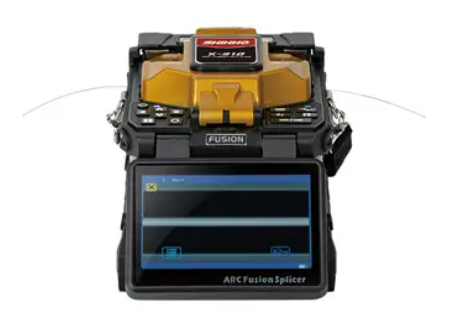
This type uses precision cameras and image analysis to align the fiber cores automatically, achieving extremely low splice loss. It’s ideal for single-mode fibers, long-distance transmission, and high-capacity networks where accuracy and consistency are critical for overall signal performance.
Cladding alignment splicers align fibers based on their outer diameter rather than the core. While slightly less precise, they are faster, lighter, and more affordable. These splicers are suitable for multimode fiber installations, local connections, and field operations where speed is a priority.
Ribbon splicers can fuse multiple fibers — often up to 12 — simultaneously, improving productivity in high-density installations. They are essential for backbone projects, data centers, and large-scale telecommunication systems that require parallel splicing for bundled optical ribbons.
Single-fiber splicers are compact, field-friendly tools designed for precision work on individual fibers. They are ideal for small repairs, maintenance jobs, or installations that demand the lowest possible signal loss and long-term performance reliability.
Splicer Type | Alignment Method | Typical Use Case | Splice Loss Range |
Core Alignment | Optical Core | Long-distance, single-mode | 0.02–0.04 dB |
Cladding Alignment | Outer Layer | Local connections, multimode | 0.05–0.1 dB |
Ribbon Fiber | Parallel Fiber Set | Data center backbone | 0.02–0.05 dB |
Single-Fiber | Manual/Core | Repair or installation | 0.02 dB typical |
Even the smallest particle of dust or residue can increase splice loss or create weak joints. Always clean fibers immediately before cleaving using fresh alcohol wipes. Contaminated fibers can lead to burned ends, poor fusion, and unreliable performance over time.
A poor or uneven cleave prevents proper alignment, resulting in high loss and reflection. Replace or rotate cleaver blades regularly to maintain precision. Always inspect the cleaved surface under magnification to confirm a smooth, perpendicular end before splicing.
Using incorrect arc power, duration, or alignment modes for the fiber type can compromise splice quality. Review the splicer’s preset programs or create custom profiles for single-mode and multimode fibers to ensure optimal results and consistent low-loss splices.
Incorrect heating can weaken splice protection or deform the sleeve. Follow the manufacturer’s temperature and duration recommendations. Ensure the sleeve shrinks evenly around the splice, providing complete protection from bending, moisture, and vibration.
Splice loss indicates how much optical power is lost at the joint. High loss suggests misalignment, contamination, or arc issues. For professional installations, aim for losses under 0.05 dB. Monitoring loss values ensures network reliability and compliance with performance standards.
An Optical Time-Domain Reflectometer sends light pulses through the cable and measures reflections along the path. It pinpoints splice locations and identifies potential defects. Regular OTDR testing ensures each splice meets optical and physical quality requirements.
Always inspect splices under magnification to detect cracks, air bubbles, or burns. Visual inspection complements electronic testing, confirming the physical integrity of the joint. A clean, smooth fusion point without visible imperfections indicates an optimal splice.
Maintain detailed records of splice locations, loss values, and environmental conditions. Logging these details improves maintenance efficiency and supports future troubleshooting. Organized records also help validate quality during network certification audits.
Regular cleaning of electrodes, fiber holders, and V-grooves prevents contamination that can affect alignment accuracy. Calibrate the splicer every 100–200 splices or as recommended by the manufacturer to maintain precise performance in the field.
For mobile operations, ensure batteries are fully charged and stored properly between uses. Replace old or swollen batteries early to avoid voltage fluctuations during splicing. Consistent power supply prevents arc instability and ensures uniform splice quality.
Manufacturers release firmware updates that enhance core alignment accuracy, add new fiber profiles, and fix operational bugs. Keeping your Fusion Splicer up to date ensures reliable operation and compatibility with emerging fiber standards.
Always store your splicer in a padded, dustproof, and shock-resistant case. Avoid extreme temperatures, humidity, or vibrations that may damage internal optics. Proper handling extends the machine’s lifespan and ensures stable performance across projects.
Outdoor splicing requires protection from wind, dust, and humidity. Set up a portable enclosure, stabilize your equipment, and use anti-static mats to minimize contamination. Maintaining environmental control ensures consistent fusion quality, even in remote locations.
Always carry a compact Fusion Splicer kit containing cleavers, spare electrodes, sleeves, and cleaning supplies. Fast, precise emergency splicing minimizes downtime and restores service quickly, especially in mission-critical fiber network applications.
Properly route, label, and secure spliced fibers within trays or closures. Use bend-radius guides and cable ties to prevent sharp bends or tension. Organized management not only protects the splice but also simplifies future maintenance or upgrades.
Invest in professional training and certification programs to stay current with evolving fiber technologies. Certified technicians work more efficiently, achieve lower splice loss, and are qualified to handle advanced splicer features such as real-time loss monitoring and AI-based core alignment.
Mastering how to fusion splice fiber ensures strong, low-loss connections for any network. With proper tools, precision, and maintenance, technicians can achieve reliable results every time. Shinho Optics Limited. provides advanced Fusion Splicer solutions designed for accuracy, durability, and ease of use—helping professionals build faster, more stable fiber networks with confidence.
A: Fusion splicing is the process of joining two fiber optic cables by melting their ends together to create a seamless, low-loss connection. It ensures stable signal transmission and is essential for building reliable, high-speed communication networks.
A: To learn how to use a Fusion Splicer for fiber installation, prepare and clean the fibers, align them in the machine, start the fusion arc, and protect the joint with a heat-shrink sleeve. A fiber optic fusion splicing step by step guide helps ensure consistent, professional results.
A: To fusion splice fiber optic cable, you’ll need a Fusion Splicer, fiber cleaver, stripper, cleaning materials, and heat-shrink sleeves. These tools ensure precision, cleanliness, and durability throughout the splicing process.
A: To perform fiber fusion splice with minimal loss, always use a calibrated Fusion Splicer, ensure perfect fiber cleaving, and keep all components clean. Proper alignment and equipment maintenance reduce reflection and signal loss.
A: A Fusion Splicer with core alignment offers higher accuracy and lower loss by aligning fiber cores optically, while cladding alignment splicers align fibers based on the outer layer—faster but slightly less precise.
A: The price of a Fusion Splicer depends on its features, alignment method, and brand. Entry-level models start affordably, while advanced core alignment units for professional use cost more but deliver superior precision and durability.
A: Fusion splicing creates a permanent, high-strength connection with extremely low loss, while mechanical splicing relies on connectors that may loosen over time. For long-term reliability, fusion splicing is the preferred method.
A: Regular cleaning and calibration of a Fusion Splicer after every 100 splices—or as recommended by the manufacturer—ensures consistent alignment accuracy, prevents contamination, and extends the equipment’s service life.
A: Yes, but when performing fiber optic fusion splicing step by step outdoors, protect your Fusion Splicer from wind and dust using a field tent or enclosure. Stable environmental conditions help achieve clean, low-loss results.
A: After completing a splice, use a Fusion Splicer’s built-in loss estimator or an OTDR to check for reflections and confirm proper signal flow. Following a fiber optic fusion splicing step by step guide ensures repeatable, reliable performance.


